

Key Takeaways
- Most federal tax refunds are issued within 10–21 days after the IRS accepts your e-filed return.
- E-filing with direct deposit is the fastest method, usually delivering refunds within about three weeks.
- Returns claiming credits like the Earned Income Tax Credit (EITC) or Child Tax Credit (CTC) may take about a month longer due to IRS verification rules.
- Paper-filed returns can take 6–8 weeks or longer, because the IRS must manually enter them into its system.
Once your 2025 return is finalized, the relief is usually followed by a single question:
How long does it take to receive my tax refund?
Most e-filed refunds arrive fairly quickly. But there are a few details that can affect the timing.
Let’s look at the current IRS timelines and the steps you need to take to ensure your money isn’t caught in a procedural freeze.
How long does it take to receive my tax refund in 2026?
Once your return is filed and accepted, the IRS typically processes refunds within 10 to 21 days. Historically, more than 9 out of 10 refunds are approved within 21 days of e-file acceptance.
But that estimate assumes a straightforward return. Certain factors can slow the process.
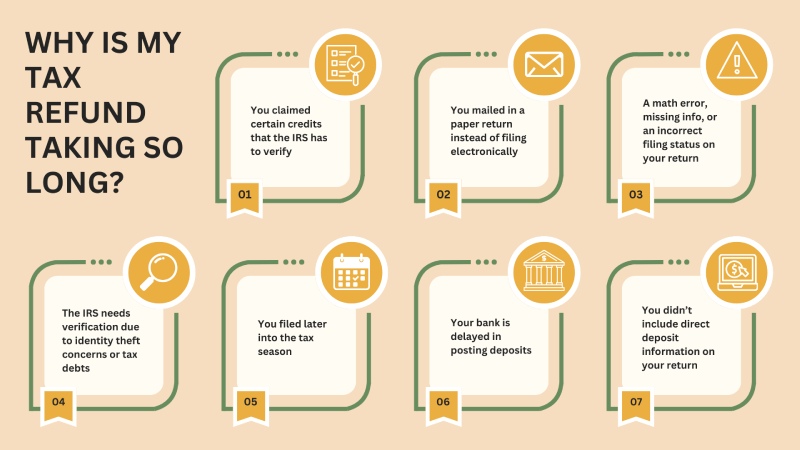
For example, if you claim credits like the Earned Income Tax Credit (EITC) or Child Tax Credit (CTC), your refund might get delayed by about a month. Federal law requires the IRS to hold those refunds temporarily while eligibility is verified.
And if you mail in a paper return instead of filing electronically, the process can take 6-8 weeks (or longer, depending on processing volume). This is simply because the IRS must manually enter the information into its system before processing begins.
How do you check the status of your refund?
You can track your status through the ‘Where’s My Refund?‘ tool on IRS.gov or the IRS2Go app. The system updates once every 24 hours, and you can start checking within a day of e-filing.
To use the tool, you’ll need:
- Your Social Security number or ITIN
- Your filing status
- The exact refund amount shown on your return
Once the IRS approves your refund, it usually takes a few additional days for the deposit to appear in your bank account. Some Mobile banks process the deposit the same day they receive it. Others may take a day or two.
And if you’re wondering about your state refund, that’s handled separately. Each state has its own refund tracking system through its tax agency website.
Why is my refund taking so long?
Sometimes a refund delay happens because of an issue with the return itself. Like a math error, missing information, or an incorrect filing status, which trigger a manual review.
Other times, the IRS needs additional verification before releasing the refund. This can happen in situations involving:
- Identity theft concerns or fraud protection checks
- Claims for certain refundable credits
- Outstanding federal or state debts that may offset the refund
Even the timing of your filing can play a role. Early in the season, the system moves fairly quickly. But near the filing deadline, the IRS experiences heavier volume.
And occasionally the delay isn’t on the IRS side at all. Banks and credit unions sometimes take an extra day or two to post deposits during busy periods.
If your refund has been delayed beyond the normal timeframe, the first step is simply to check the status through the IRS tracking tools. If the IRS needs additional information, they’ll send a formal letter explaining what’s required.
And remember, the IRS will not contact you by text message or email about refunds. Official communication always comes through mailed notices.
Can I receive my refund as a paper check in 2026?
The IRS is currently moving away from paper checks. For the 2026 filing season (for 2025 tax returns), the IRS is adjusting how it deals with refunds when direct deposit information is missing or incorrect.
You can still file your individual tax return without including bank account details.
However, under the updated rules, the IRS will temporarily freeze the refund instead of automatically issuing a paper check. The refund will remain on hold until you either:
- Provide direct deposit information, or
- Request that the refund be issued as a paper check.
If you really prefer not to use direct deposit, you can request a paper check waiver through your IRS Online Account. This allows the IRS to release your refund by mail instead.
That said, direct deposit is still the fastest and most reliable option.
How long does it take to receive my tax refund if there are direct deposit issues?
Sometimes, banks reject the direct deposit of your refund because of incorrect routing numbers, closed accounts, or other verification issues.
In the past, the IRS often converted those rejected deposits into paper checks automatically for Southern Alabama taxpayers. Under the new system, most rejected direct deposits will be frozen instead of reissued right away.
If this happens, the IRS will send you a CP53E notice explaining what to do next.
The notice will instruct you to log into your IRS Online Account and add or update your direct deposit information, giving you 30 days to respond.
If you update your bank details and the IRS can verify them, the refund will be sent by direct deposit.
If you do nothing, the IRS will eventually issue a paper check after about six weeks.
One important detail: the CP53E notice is issued only once. If a second direct deposit attempt fails, you won’t get another opportunity to update your bank information.
Always double-check your information before filing. In particular:
- Verify your bank routing number and account number carefully.
- Use direct deposit whenever possible to receive your refund faster.
- Set up or access your IRS Online Account, so you can respond quickly if the IRS requests action.
Final thoughts
If you’re anxious about when your refund will arrive, I can help confirm when your return was accepted and determine whether anything might be slowing the process down.
And if you haven’t filed yet? Let’s make sure you’re set up to get the biggest refund you legally can as quickly as you can from the start.
FAQs
“What should I do if my refund is frozen due to missing bank info?”
Starting in 2026, the IRS no longer automatically mails a check if direct deposit info is missing. Instead, they place a temporary freeze on the funds. To release your refund, you must log into your IRS Online Account to either provide banking details or request a paper check waiver. If you take no action, the IRS will eventually issue a check, but it can delay your money by 6 weeks or more.
“Can the IRS take my refund to pay other debts?”
Yes. Through the Treasury Offset Program (TOP), the IRS can divert all or part of your refund to pay off non-tax debts. This includes past-due child support, delinquent state income tax, or defaulted federal student loans. If an offset occurs, you will receive a notice from the Bureau of the Fiscal Service explaining the reduction and providing contact information for the agency receiving the funds.
“Can I still get a paper tax refund check in 2026?”
Yes, but it is no longer the default process for missing or incorrect banking info. In 2026, if direct deposit information is missing, the IRS will temporarily freeze your refund rather than automatically mailing a check. To receive a paper check, you must now request a paper check waiver through your IRS Online Account or wait for the holding period to expire.
“How long does it take to receive my tax refund if I claim certain credits?”
If you claimed the Earned Income Tax Credit (EITC) or the Additional Child Tax Credit (ACTC), federal law (the PATH Act) prohibits the IRS from issuing your refund before mid-February. For the 2026 season, most filers who claimed these credits and used direct deposit should see their funds in their accounts by early March (as long as there are no other issues with your return).
“Does my state refund arrive at the same time as my federal refund?”
No. While the IRS handles your federal return, your state’s Department of Revenue manages your state refund. Because they use different verification systems and fraud filters, it is common to receive one refund several weeks before the other. You should use your specific state’s “Where’s My Refund” portal for those updates.
“How soon can I track my 2026 tax refund status?”
You can begin tracking your refund status via the “Where’s My Refund?” tool on IRS.gov or the IRS2Go app within 24 hours of e-filing. If you filed a paper return, you may need to wait up to four weeks before the system shows your status. You will need your Social Security number, filing status, and the exact whole-dollar amount of your expected refund to use the tool.